


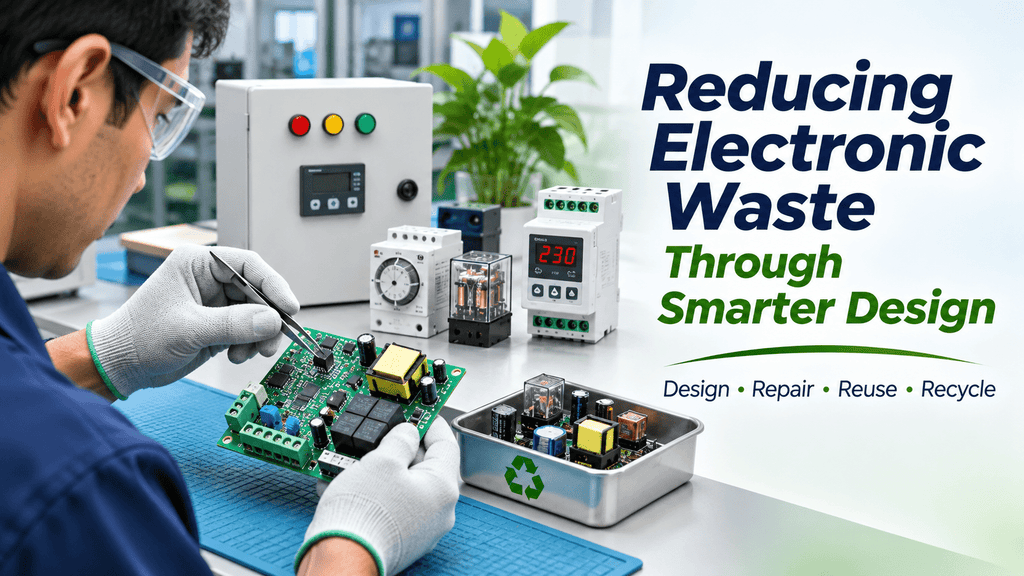
Reducing Electronic Waste Through Smarter Design
The rapid growth of technology has transformed the way we live, work, and communicate. From household appliances and lighting systems to electronic controllers and smart devices, electronics have become an essential part of everyday life. However, this growing dependence also brings an important environmental challenge: the increasing volume of electronic waste.
Discarded appliances, damaged electronic equipment, outdated devices, and unused electrical accessories contribute to the growing e-waste problem. While recycling and responsible disposal are important, reducing electronic waste must begin much earlier—with the way electronic products are designed.
Smarter design focuses on creating products that last longer, consume less energy, are easier to maintain, and can be repaired instead of replaced. For the electronics industry, this represents an important step towards more responsible and sustainable product development.
Why is Electronic Waste a Growing Concern?
Electronic waste, commonly known as e-waste, includes discarded electrical and electronic products such as televisions, refrigerators, fans, chargers, control devices, lighting equipment, and other household and industrial electronics.
As technology advances, consumers often replace existing products to access newer features or improved performance. At the same time, products that fail prematurely due to poor durability, component damage, or inadequate protection add to the growing volume of discarded electronics.
E-waste contains valuable materials that can potentially be recovered and reused. However, certain electronic components also contain substances that require specialised handling. Improper disposal can lead to environmental contamination. Reducing this waste requires a shift in how electronic products are designed, manufactured, maintained, and used.
Designing Electronics for a Longer Lifespan
One of the most effective ways to reduce electronic waste is to make products more durable. An electronic product that performs reliably for several years does not need to be replaced as frequently as one that fails prematurely. This reduces the demand for new products and the resources required to manufacture and distribute them.
Durability begins with appropriate component selection, effective thermal management, suitable electrical ratings, and designs that can withstand the conditions in which the product is expected to operate. For example, electronic equipment exposed to voltage fluctuations, excessive current, overheating, or frequent switching may experience premature damage. Incorporating suitable protection mechanisms can help prevent avoidable failures and extend equipment life. The principle is straightforward: the longer a product remains functional, the less frequently it contributes to electronic waste.
Making Products Easier to Repair
A damaged electronic product does not always need to be replaced entirely. In many cases, a faulty component or connection may be responsible for the malfunction. If a product is designed to allow easier inspection, servicing, and replacement of individual components, it can often remain useful for much longer.
Repair-friendly design can include accessible components, standardised parts where practical, clear product documentation, and modular construction. This approach benefits consumers by reducing replacement costs and helps minimise the number of electronic products discarded unnecessarily. Manufacturers can also support this effort by making spare parts and maintenance information available wherever practical.
Improving Energy Efficiency
Sustainable electronic design is not limited to reducing waste after a product reaches the end of its life. It also involves reducing the energy consumed while the product is in use. Many electronic products operate for several hours every day. Even small improvements in energy efficiency can make a meaningful difference when considered over years of operation.
Energy-efficient motors, LED lighting, intelligent controllers, and automatic switching systems are examples of technologies that can help reduce unnecessary energy consumption. Similarly, automation can prevent equipment from operating when it is not required. For instance, automatic pump controllers can regulate operation based on water-level requirements, helping avoid unnecessary running. By combining efficient operation with appropriate protection, electronic products can deliver better performance while using resources more responsibly.
Choosing Components Responsibly
The components used in electronic products have a direct influence on their reliability, efficiency, and environmental impact. Selecting components based on the actual requirements of an application can help avoid unnecessary material use while ensuring dependable performance. Manufacturers can also consider component durability, energy consumption, availability of replacement parts, and recyclability when making design decisions. Using suitable components is particularly important in products exposed to demanding operating conditions. Components that cannot withstand the intended electrical or environmental conditions may fail prematurely, resulting in additional repairs or replacements. Responsible component selection therefore contributes to both product performance and sustainability.
Preventing Premature Product Failure
Many electronic products are discarded not because they have become technologically obsolete, but because they have stopped functioning. Voltage fluctuations, overloads, overheating, short circuits, and irregular power supply can damage electrical equipment and shorten its useful life. Protection devices help reduce these risks by monitoring electrical conditions and responding when abnormal situations occur. Voltage stabilisers, overload protection systems, motor protection devices, and automatic controllers are examples of solutions that help safeguard electrical equipment.
For products such as pumps, motors, and household appliances, appropriate protection can help prevent avoidable damage and reduce the need for frequent replacements. Preventing premature failure is an important part of responsible electronics design and product use.
Responsible Disposal and Recycling
Even well-designed electronic products eventually reach the end of their useful life. At this stage, responsible disposal becomes essential. Electronic products should not be discarded with ordinary household waste. They may contain materials that require specialised recycling and treatment. Consumers can contribute by using authorised e-waste collection centres, returning eligible products through manufacturer take-back programmes, and choosing appropriate recycling channels. Manufacturers can support responsible disposal by providing product information, encouraging repair wherever feasible, and considering recyclability during the design process. The objective is to recover useful materials, reduce landfill waste, and prevent harmful substances from entering the environment.
The Future of Responsible Electronics Design
The future of the electronics industry will depend not only on technological innovation but also on how responsibly products are designed and used. Longer product life, energy efficiency, repairability, component reliability, and responsible recycling are becoming essential considerations in sustainable electronics.
Smarter design does not mean compromising on performance or affordability. Instead, it means creating products that deliver dependable performance while making better use of materials, energy, and other resources.
Conclusion
Reducing electronic waste begins with designing products that do not need to be replaced unnecessarily.
From selecting durable components and improving energy efficiency to incorporating suitable protection mechanisms and encouraging repair, every design decision can contribute to a more sustainable electronics industry.
At Gelco Electronics, the importance of reliable electronic solutions reflects a broader principle of responsible product development: creating products that perform efficiently, protect connected equipment, and support longer operational life. Because the future of electronics is not just about making technology smarter. It is also about making it more responsible.


