


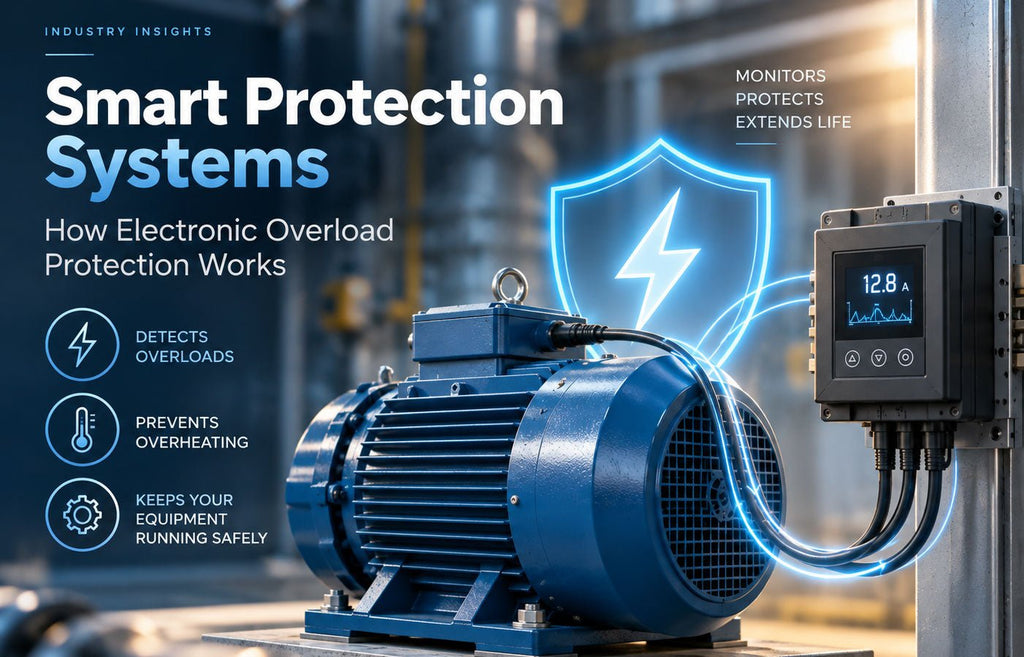
Smart Protection Systems: How Electronic Overload Protection Works
Electrical motors and machines are designed to operate within specific current and load limits. When equipment is forced to work beyond those limits, the additional electrical stress can generate excessive heat, damage internal components, and eventually lead to motor failure. In real-world applications, overload can occur for many reasons—from mechanical problems and excessive usage to worn-out equipment and changing operating conditions.
This is where electronic overload protection becomes an important part of modern motor protection systems. As part of Gelco Electronics' Smart Protection Systems series, this blog explores what electronic overload protection does, how it works, and why it is important for reliable motor operation.
What Is an Electrical Overload?
An overload occurs when a motor draws more current than it is designed to handle for a sustained period. This does not necessarily mean there is a short circuit or an immediate electrical fault. Instead, the motor may simply be working under excessive load.
For example, a pump may experience increased resistance because of mechanical wear, blockage, or changing operating conditions. An aging motor may also require more current to perform the same task. If the equipment continues operating under these conditions, the excess current produces additional heat in the motor windings.
Over time, this heat can deteriorate insulation and other internal components, increasing the possibility of motor damage.
How Electronic Overload Protection Works
Electronic overload protection continuously monitors the current flowing through the connected equipment. A protection system is configured with an appropriate current range based on the motor's operating requirements.
When the current remains within the expected range, the motor continues operating normally. If the current rises beyond the set protection level, the system detects the abnormal condition and responds by disconnecting or stopping the equipment.
Once the overload condition is addressed, the equipment can be restarted according to the protection system's operating configuration. This prevents the motor from continuing to operate under damaging conditions.
The key advantage is that protection is based on actual current conditions, rather than simply relying on the user to recognize that the motor is under stress.
Why Motors Experience Overload
Overload can happen even when a motor initially appears to be operating normally. Common causes include:
- Excessive usage: Continuous operation for long periods can place additional thermal and electrical stress on a motor.
- Worn-out equipment: Aging motors and pumps may become less efficient and require higher current to perform their intended function.
- Mechanical problems: Blockages, increased friction, or other mechanical issues can make the motor work harder.
- Faulty equipment: A defective pump or connected machine can cause abnormal current consumption.
- Operating conditions: Changes in the mechanical load can cause current demand to increase beyond normal levels.
Identifying and responding to these conditions early can help prevent more serious equipment failures.
Electronic Overload Protection vs. Conventional Protection
Traditional motor protection methods can provide essential safety, but modern electronic protection systems offer more flexibility by continuously monitoring operating conditions and allowing current protection levels to be configured according to the application.
This is particularly useful when different motors or machines have different current requirements. A settable electronic overload range allows the protection system to be matched more closely to the equipment being protected.
For motors operating in demanding environments such as agriculture, industry, workshops, and water-pumping applications, this additional level of monitoring can make a significant difference to equipment reliability.
Why Current Monitoring Matters
Current is one of the most useful indicators of motor performance. A noticeable increase in current consumption can signal that the equipment is experiencing abnormal stress.
When protection systems combine overload monitoring with digital current indication, users can gain greater visibility into how their equipment is operating. Instead of relying entirely on external meters or waiting for a motor to fail, operators can observe current behaviour and respond to potential problems earlier.
This makes electronic protection not just a safety feature, but also a useful tool for equipment monitoring and maintenance.
The Role of Overload Protection in Smart Motor Control
Modern motor starters and control panels increasingly combine several protection functions into a single system. Depending on the application, these may include high- and low-voltage protection, overload protection, dry-run protection, phase protection, voltage imbalance protection, timers, and automatic ON/OFF functions.
Electronic overload protection forms an important part of this approach because it addresses one of the most common causes of motor overheating: excessive current over time.
By detecting abnormal load conditions and stopping equipment before prolonged overload causes serious damage, smart protection systems help improve reliability, reduce unexpected downtime, and extend equipment life.
Conclusion
Electronic overload protection is about more than simply switching a motor off when something goes wrong. It continuously monitors current, identifies abnormal load conditions, and helps prevent excessive electrical and thermal stress from developing into costly equipment damage.
As motors and electrical systems become increasingly automated, protection systems are evolving from basic switching devices into intelligent monitoring and control solutions. For agricultural pumps, industrial machinery, and everyday electrical equipment, electronic overload protection provides an important layer of reliability—helping equipment operate safely, efficiently, and for longer.


