


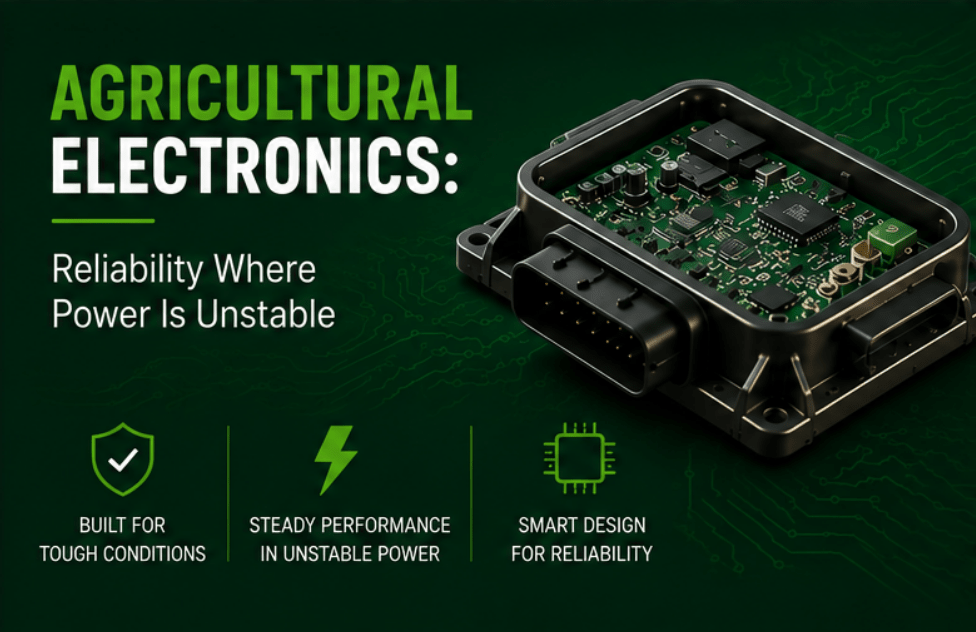
Agricultural Electronics: Reliability Where Power Is Unstable
In our previous blog, "Electronics in Harsh Conditions: Heat, Dust & Moisture Challenges," we explored how environmental factors affect the performance and lifespan of electrical equipment. While heat, dust, and moisture are significant challenges, another equally important issue often faced in rural and agricultural areas is unstable power supply. For farmers, electrical reliability is not just about convenience—it directly impacts irrigation, crop health, productivity, and operational costs.
Agricultural electronics must operate under some of the most demanding conditions imaginable. Remote locations, fluctuating grid voltage, long power outages, and continuous motor operation make farming one of the toughest environments for electrical equipment. Designing systems that can withstand these conditions is essential for ensuring uninterrupted agricultural operations.
Why Agriculture Places Unique Demands on Electronics?
Unlike residential or commercial applications, agricultural equipment often operates for extended hours in open fields and remote locations where electrical infrastructure may not be as stable. Water pumps, irrigation systems, grain processing machines, and other farm equipment depend on consistent electrical performance to keep daily operations running smoothly.
Unfortunately, rural power networks are often affected by voltage fluctuations, phase imbalance, sudden outages, and inconsistent supply. These conditions place continuous stress on motors and electronic control systems, increasing the likelihood of equipment failure if proper protection is not in place.
The Challenges of Unstable Power Supply
Power instability is one of the leading causes of motor damage in agricultural applications. Some of the most common issues include:
- Voltage fluctuations, which can cause motors to overheat or operate inefficiently.
- Power outages interrupt irrigation schedules and require manual restarting of equipment.
- Phase failure or voltage imbalance in three-phase systems leads to motor burnout.
- Overloading caused by ageing pumps or mechanical faults that increase current consumption.
- Dry running, where pumps continue operating without water, generates excessive heat and damages the motor.
Individually, these issues are problematic. Together, they can significantly reduce equipment life and increase maintenance costs.
Why Reliable Protection Matters?
Agricultural equipment is often installed far from constant human supervision. Farmers cannot always monitor pumps or control panels throughout the day, especially when irrigation systems operate during nighttime or scheduled power supply hours.
Modern electronic protection systems help bridge this gap by continuously monitoring operating conditions and automatically responding when abnormalities occur. Features such as high and low voltage protection, overload protection, dry-run protection, automatic restart after power restoration, and phase protection help prevent costly equipment damage while reducing manual intervention.
This not only improves reliability but also saves valuable time and labour during critical farming seasons.
Automation Is Transforming Modern Farming
Today's agricultural electronics go beyond simply switching motors ON and OFF. Intelligent control panels and motor starters now automate many routine operations.
Automatic timers can operate pumps according to irrigation schedules, while water-level monitoring systems prevent tank overflows and unnecessary water wastage. Automatic restart functions ensure equipment resumes operation safely after power is restored, minimizing disruptions caused by unexpected outages.
These automation features improve operational efficiency while allowing farmers to focus on other important activities instead of continuously monitoring electrical equipment.
Building Electronics for Agricultural Conditions
Reliable agricultural electronics must be designed specifically for challenging field conditions. They should withstand heat, dust, humidity, and unstable electrical supply while delivering consistent performance throughout the year.
Modern protection solutions typically incorporate:
- High and low voltage protection
- Overload and overheating protection
- Dry-run detection
- Phase failure and voltage imbalance protection
- Digital monitoring of voltage and current
- Automatic restart and timer functions
Together, these features create a safer and more dependable electrical system capable of handling the realities of agricultural operations.
The Role of Smart Protection in Sustainable Farming
As agriculture becomes increasingly technology-driven, electrical reliability plays a larger role in improving productivity and resource efficiency. Smart protection systems help reduce water wastage, lower maintenance costs, minimize equipment downtime, and extend the service life of motors and pumps.
For farmers, investing in reliable electrical protection is no longer simply about preventing failures—it is about ensuring uninterrupted irrigation, protecting valuable assets, and supporting sustainable farming practices.
Conclusion
Agricultural environments demand far more from electrical systems than most other applications. Unstable power supply, harsh weather conditions, and continuous motor operation create challenges that ordinary electrical equipment is not designed to handle. Reliable protection and intelligent control have therefore become essential components of modern farming. By combining robust electronics with advanced protection features and automation, farmers can improve efficiency, reduce unexpected downtime, and ensure their irrigation systems continue to perform reliably even when power conditions are far from ideal.


