


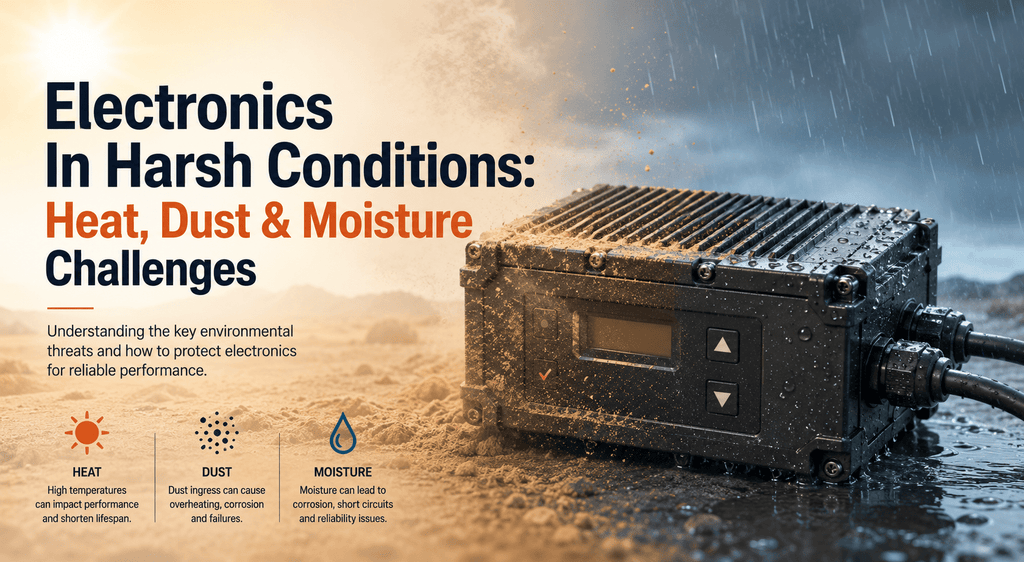
Electronics In Harsh Conditions: Heat, Dust & Moisture Challenges
Electronics today operate far beyond clean laboratories and controlled indoor spaces. From agricultural fields and industrial plants to outdoor installations and construction sites, electrical systems are constantly exposed to harsh environmental conditions. While modern electronics are highly advanced, their reliability and lifespan are heavily influenced by the environments in which they operate.
Among the most common environmental challenges are heat, dust, and moisture. These factors may seem external, but they can significantly impact the internal performance and safety of electronic systems.
Why Environment Matters in Electronics?
In theory, electrical systems are designed to operate under stable conditions. In reality, however, equipment often faces high temperatures, dusty surroundings, humidity, and unstable power supply simultaneously.
Agricultural motors may run under direct sunlight and dusty conditions. Industrial control panels are exposed to continuous heat generated by heavy machinery. Outdoor systems regularly face rain, humidity, and changing temperatures. These conditions create additional stress on electrical equipment and increase the risk of failure.
Heat: A Major Cause of Equipment Failure
Heat is one of the biggest threats to electronics. Every electrical component generates heat during operation, but excessive temperatures can rapidly reduce performance and lifespan.
In motors and control panels, overheating can:
- Damage insulation materials
- Increase electrical stress
- Reduce component efficiency
- Lead to premature equipment failure
In industrial and agricultural environments, ambient temperatures are already high. When combined with overload conditions or poor ventilation, equipment temperatures can rise dangerously.
This is why thermal protection systems and proper ventilation are essential for modern electrical systems.
Dust: The Overlooked Problem:
Dust is often underestimated, but it can create serious issues inside electrical systems. Dust buildup blocks airflow, traps heat, and reduces cooling efficiency. In some cases, conductive dust particles may even cause short circuits.
Over time, dust accumulation can:
- Increase operating temperature
- Reduce system efficiency
- Damage cooling fans and moving components
- Affect circuit reliability
For electronics operating in farms, factories, and workshops, dust protection is critical. Enclosed panels and durable housing designs help reduce exposure and improve long-term reliability.
Moisture and Humidity Challenges:
Moisture is another major environmental threat to electronics. Water and humidity can corrode electrical contacts, damage insulation, and create leakage currents inside circuits.Outdoor systems and equipment operating during monsoon seasons are especially vulnerable.
Moisture-related problems often include:
- Rusting of terminals and connectors
- Reduced insulation resistance
- Short circuits and electrical leakage
- Failure of sensitive components
Proper sealing, moisture-resistant materials, and weather-protected enclosures are essential for systems exposed to humid or wet conditions.
Why Harsh Conditions Increase Electrical Stress:
Environmental challenges rarely occur independently. Heat, dust, and moisture often combine with unstable voltage supply and continuous equipment operation, placing even greater stress on electrical systems.
For example:
- Dust buildup increases heat retention
- High temperatures worsen overload conditions
- Moisture weakens insulation during voltage fluctuations
Without proper protection systems, these combined effects can significantly shorten equipment life and increase maintenance costs.
Designing Electronics for Real-World Reliability:
Modern electronics must be designed not only for performance but also for durability in demanding environments.
Reliable systems often include:
- Thermal and overload protection
- Voltage monitoring systems
- Dust- and moisture-resistant enclosures
- Efficient ventilation and heat dissipation
At Gelco Electronics, electrical protection and reliability are designed with real-world conditions in mind, ensuring systems continue to perform safely even in harsh environments.
Conclusion
Heat, dust, and moisture are among the biggest challenges faced by electronics operating in real-world environments. These conditions continuously affect efficiency, reliability, and equipment lifespan—especially in agricultural, industrial, and outdoor applications. As electrical systems become more advanced and sensitive, designing for environmental durability is more important than ever. By combining intelligent protection systems, durable design, and regular maintenance, electrical equipment can continue to operate safely and efficiently even under demanding conditions.


